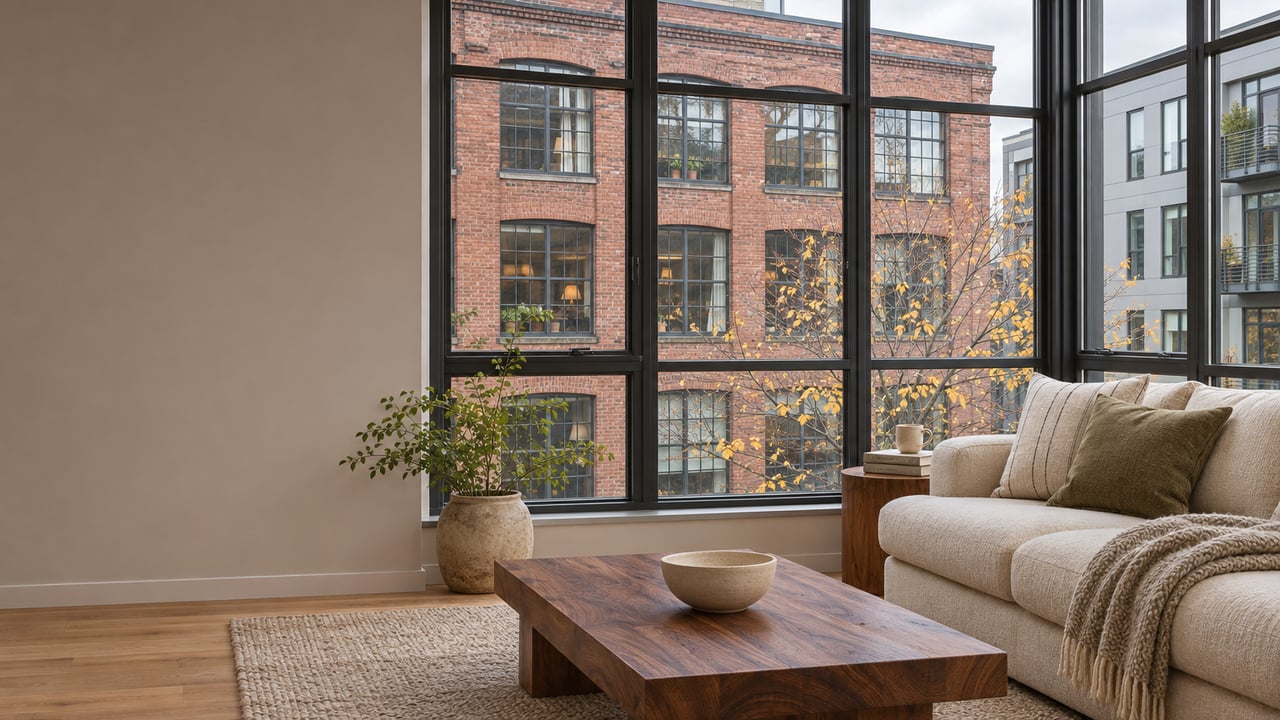
A penthouse at 937 Condominiums in the Pearl District closed this past May 15 for $1,415,000. It had spent 940 cumulative days on the market, a little over two and a half years, according to The Oregonian/OregonLive. The monthly dues on that unit are $2,115. Sales like this one are why the Pearl's prices look stuck. A June story in the Portland Business Journal reported that some Pearl units are closing at the prices their buildings first sold for.
If you compare the Pearl with other urban neighborhoods using portal medians, it looks like a bargain that has gone unclaimed for ten years. A better reading is that the cost of owning a Pearl condo has kept climbing since at least 2021, and more of that cost now arrives as monthly dues than as the sale price. Once you price the dues in, the building's finances matter as much as the floor plan.
A decade of flat prices started with two towers
The Pearl is close to a condo-only market. Portland appraiser Abdur Abdul-Malik notes in the Portland Appraisal Blog that apart from one small townhome development, every home you can buy there is a condominium. His RMLS analysis, published in December 2024, found that average Pearl sale prices had fallen steadily since 2016 and that the 2024 average was about the same as 2015's.
He traced the drop mostly to supply. The Cosmopolitan on the Park finished in 2016 with 150 units and is the largest residential tower in Portland. Vista Pearl followed in 2018 with 153 units. The market absorbed the Cosmopolitan well. When Vista Pearl opened, active listings across the Pearl jumped and stayed high, and never-occupied Vista units were still selling in early 2024.
Demand grew more slowly than that supply did. In a March 2026 OregonLive report, an economist said fewer people are moving into the city than in the late 2010s. He also said detached houses have land value underneath them, which supports their price. A condo owner owns a share of a building, and a building gets older and costs more each year to run. That is the starting point for the rest of this post.
The part of the price that kept rising
Monthly dues pay for the building: insurance, staff, utilities, maintenance and the reserve fund for future repairs. From 2021 to 2026, while Pearl sale prices stayed flat, dues rose quickly.
| Measure | Figure | Period |
|---|---|---|
| The Gregory, 420 NW 11th Ave., dues per sq. ft. per month | $0.41 | 2021 |
| The Gregory, dues per sq. ft. per month | $0.59 | 2026 |
| Average dues per sq. ft., Portland luxury high-rises | $0.84 | 2026 |
| Ritz-Carlton Residences dues per sq. ft., highest in Portland | $1.30 | 2026 |
| Average regional condo dues, RMLS | $497.10 per month | 2025 |
| Average regional condo dues, RMLS | $586.72 per month | Q1 2026 |
The Gregory, Ritz-Carlton and high-rise average figures come from OregonLive's October 2026 report on HOA fees. The regional averages come from the Portland Appraisal Blog's 2025 annual review and Q1 2026 update. The Q1 figure was up 27.9% from Q1 2025.
The Gregory, built in 2001, shows what this means for one unit. A two-bedroom there with 2,017 square feet was listed this fall at $1,050,000 with dues of $1,188 a month. At the 2021 rate of $0.41 per square foot, the same unit would have paid about $827 a month. The difference is about $361 a month, or roughly $4,300 a year. No renovation or extra square footage comes with it. Buyers know this and adjust their offers for it, which is part of why sticker prices stay flat.
The increase goes well beyond the Gregory. A broker quoted in the same OregonLive story reviewed dozens of Portland condo buildings and found that average recurring dues rose about 58% from 2021 to 2026, while national inflation was about 22%. He tied the gap to higher costs for insurance, utilities, labor, maintenance, repairs and reserve requirements. The listing broker for the Gregory unit told OregonLive that higher fees, taxes and the cost of financing together put these homes out of reach for many buyers.
Higher dues are not automatically a warning sign. The same reporting noted that a well-run association may charge more each month because it is paying for future repairs now instead of postponing them. You can't compare two Pearl listings by price per square foot alone. You need the price, the dues and what the dues actually pay for.
Why the building's finances are part of the price
A single repair can outweigh years of dues increases. In March 2024, OregonLive reported that the Cosmopolitan's association planned a roughly $31 million HVAC replacement, with one-time owner assessments ranging from about $110,000 to nearly $850,000. At the time, the plan was on hold after the lender withdrew during a lawsuit. According to the Northwest Examiner, the association's own suit against builder Hoyt was settled in 2024 under a confidentiality agreement. By November 2025, the Examiner reported crews removing and installing HVAC equipment, with a new unit going onto the tower roof.
Two buyers looking at similar units in different towers could be taking on very different repair schedules. One building may be partway through a major system replacement. Another may have that work still ahead, and a third may have reserves that already cover it. Each building's reserve study, budget and assessment history are what set its units apart, and in a market with 9.6 months of inventory, buyers have time to ask for them.
Condo lending has been in the news this year as well. Fannie Mae published Lender Letter LL-2026-03 on March 18, 2026, with changes to its condo project reviews dated August 3, 2026 and January 4, 2027. A lender who knows Portland condos can tell you early what a specific building means for your loan.
The dues and assessment figures in this post are general information, not legal, tax or financial advice. Please confirm your own situation with your lender, attorney or tax professional.
What October's numbers say about negotiating
Market data for the Pearl District covering October 2026 shows 13 closed sales across all property types. The median sale price was $435,000, up 5% from a year earlier, with a 98% sale-to-list ratio and 75 median days on market. As of mid-November there were 125 active listings and 9.6 months of inventory. Anything above six months is usually read as a buyer's market. For the wider Portland-metro condo market in October 2026, the median was $292,000, down 7% year over year, with 8.6 months of inventory.
Taken together, these numbers say buyers have room to negotiate, but sellers aren't discounting across the board. With 13 sales in a month, a single penthouse can move the median, so the 5% gain doesn't show that Pearl values have recovered. The 98% sale-to-list ratio means the units that sold were mostly priced right to begin with. Most of the room to negotiate sits with units that have stayed on the market, and dues and building finances help explain why a unit stays on the market. In 2025 Pearl sales, the deepest discounts went to older lofts, small studios and units with higher carrying costs. Newer full-service buildings such as Vista North Pearl, the Metropolitan, the Encore and the Casey drew more interest when they were priced correctly.
The neighborhood around those buildings is also changing. Prosper Portland reports that demolition and cleanup at the former USPS site on the Broadway Corridor is finished, streets are under construction, and two residential projects are planned with more than 450 affordable and middle-income units. The Portland Metro Chamber's 2026 downtown report put Central City foot traffic at about 86% of 2020 levels and projected that vacant office space would peak at the end of 2026.
A few direct questions
Is a Pearl condo cheaper than it was in 2015? On sale price, by RMLS averages, roughly the same as in 2015 as of 2024. On monthly cost, often not. The Gregory's dues alone rose from $0.41 to $0.59 per square foot between 2021 and 2026.
Do high dues mean a building is in trouble? Not necessarily. Full-service towers cost more to run, and an association that funds its reserves well may charge more now to avoid a large assessment later. What matters is what the dues pay for and how the reserves compare with the repairs ahead.
If you're weighing the Pearl against other urban options, including the Vancouver Waterfront across the river, I'm glad to help you compare buildings by their full monthly cost and their reserves, not just the list price. I'm dual licensed in Oregon and Washington, and I can walk you through the Portland condo market one building at a time. Let's Connect with David Merrick Real Estate.